

常緑キリンソウ・常緑キリンソウ袋方式®のお問合せ
常緑キリンソウは、乾燥に強く、薄層の屋上緑化にも活用しやすい植物です。常緑キリンソウ袋方式®は、常緑キリンソウと専用土壌入りの袋状ユニットを組み合わせた、施工性と維持管理性に配慮した屋上緑化システムです。
常緑キリンソウ苗の購入、常緑キリンソウ袋方式®の導入、価格・お見積り、資料請求、施工方法、屋上緑化の失敗対策、既存屋上緑化の補修・改修・再生について、内容に応じてご相談いただけます。
失敗しない屋上緑化システム:常緑キリンソウ袋方式、常緑キリンソウに関するよくあるご質問(FAQ)情報をご案内します。
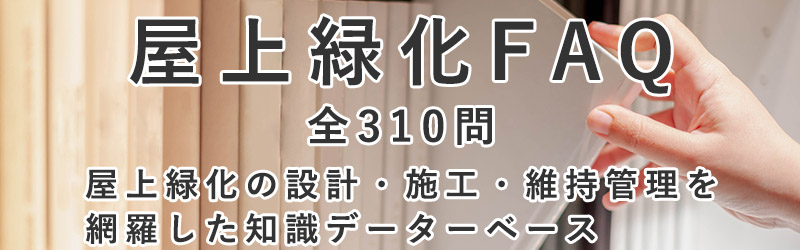
屋上緑化全般の疑問については、緑化計画研究所の「屋上緑化で後悔しないための知識データベース|屋上緑化FAQ全310問」もあわせてご覧ください。
▶ 屋上緑化FAQ全310問を見る
A01 屋上緑化以外でも使用できます。折板屋根、壁面緑化、法面緑化、砂防堰堤緑化、コンクリート法枠、モルタル吹付面、擁壁緑化、防草緑化、景観保護、その他様々な形で使用できます。色々なタイプの工事事例がございますので、詳しくは施工事例をご覧ください。
A02 常緑キリンソウ(植物の知的財産権:品種登録)、袋方式・FTMバック(袋特許)、常緑キリンソウ袋方式・常緑キリンソウ(商標)の3つで知的財産権を取得しています。
A03 植物を使用しておりますので、絶対失敗(枯れない)わけではありません。これまでの屋上緑化の失敗の原因、1.植物の選定のミス 2.雑草問題 3.土壌流出問題を解決するために商品開発を行った屋上緑化システムです。適切な日当たり、風通し、雨が当たるなどの基本条件がそろった状態でご使用下さい。屋上緑化で失敗する原因につきましては、失敗の原因をご覧ください。
A04 工業製品などに特許があるように、植物にも特許があります。植物の特許は、種苗法という法律で規定されています。特許を持った植物は、登録品種と呼ばれ、植物を独占できる権利を育成者権と呼びます。私たちの身近な米や果物も品種登録されています。例:米(つや姫)、ブドウ(マスカット)、イチゴ(あまおう)など。
A05 キリンソウもかつては、マンネングサ属(学名:セダム属)に分類している研究者も見受けられましたが、現在、国際学的にはキリンソウ属に分類されています。国内では、まだ誤った記述がみられますが、キリンソウは正式にはキリンソウ属に分類されています。常緑キリンソウとセダムは異なる種属になります。常緑キリンソウは、在来のキリンソウの品種改良を行い、より進化した植物です。常緑キリンソウは、セダム類の強さを併せ持ち、セダム類の弱点を克服した、ハイブリッド植物です。
A06 黄色の花が咲きます。キリンソウは、5~8月の時期にほとんどの個体で黄色い花を咲かせます。常緑キリンソウは、品種改良の結果、非常に花が咲きにくい性質に変わっています。キリンソウは、光による影響を受けやすく、常緑キリンソウも同じ傾向を示します。夜間照明があたる駐車場や外灯の下では、花が咲く確率が高くなっているようです。
A07 常緑キリンソウも植物ですので、まったく日が当たらない場所では生育できません。反射光で明るくなる場所で、直射日光が3時間程度あれば大丈夫です。
A08 全く違う植物です。それぞれよく間違う事が多い植物です。それぞれの植物の違いや特色を、【麒麟草に関する豆知識 Vol.3】にまとめましたのでご覧ください。
A09 大丈夫です。キリンソウはもともと海岸沿いに自生する植物で、ミネラル分を好む植物です。海水がかかっても枯れないほど塩分に強い植物です。
A10 同じではありません。11月頃に古い葉は黄色くなり、新芽と入替ります。施工事例の季節による常緑キリンソウの変化をご覧ください。
A11 20cm~30cm程度になります。11月頃に新芽と入替り、冬季は他の時期に比べ背丈が低くなります。冬期は、10cm程度となります。
A12 必要ありません。11月頃に古い葉は黄色くなり新芽と入替り、冬季は他の時期に比べ背丈が低くなりますので、特に剪定する必要はありません。なるべく黄色い葉を見せたくない場合は、秋ごろに剪定する方法もあります。
A13 買えません。常緑キリンソウは植物特許を持つ登録品種ですので、管理上ホームセンターでの販売は行っておりません。
A14 購入できます。詳しくはお問合せ下さい。
A15 常時購入できます。詳しくはお問合せ下さい。
A16 1個から購入できます。
A18 購入できます。詳しくはお問合せ下さい。
A19 雨があたる場所では、灌水(散水)の必要はありません。
A20 垂直な壁面では雨が均一に当たりません。垂直な壁面緑化の場合には、灌水(散水)は必ず必要です。
A21 正方形タイプは50cm×50cmです。長方形タイプは15cm×100cmです。サイズオーダーも可能ですのでお問合せ下さい。
A22 50cm×50cmタイプの湿潤重量は13kgです。
A23 風速45mで飛ばない事(風洞実験)を確認しております。超高層建物や風が強い地域・場所では、飛散防止ネットを使用する方法もございます。詳しくはお問合せ下さい。
A24 耐久性が有ります。10年以上の耐久性がある素材を使用しております。施工事例をご覧ください。
A25 袋は雑草が侵入しにくい防草シートで出来ています。袋の表面にコケ、ホコリ、砂などがたまり、そこに雑草が生えるケースはあります。しかし、土壌の厚さがほとんどないため、夏の暑さで雑草は枯れてしまします。
A26 袋にハトメ付きのタイプ(特注品)があります。このハトメを利用し、アンカーボルトでコンクリート面に取付ける事が出来ます。
A27 可能です。サイズやハトメ付きなどのオーダー(特注品)が可能です。詳しくはお問合せ下さい。
A28 付いていません。特注品となります。オーダー可能ですので、詳しくはお問合せ下さい。
A30 サンプル品としてご注文下さい。詳しくはお問合せ下さい。
A31 購入できません。常緑キリンソウ袋方式は、常緑キリンソウ専用に開発された物で、土壌の厚さが4cm程度しかありません。他の植物では生育が難しい環境となります。袋の交換は出来ますので、お問合せ下さい。
A32 常緑キリンソウ袋方式は、常緑キリンソウ専用に開発されたシステムです。土壌の厚さが4cm程度しかありません。他の植物では生育が難しい環境となります。他の植物を植える事はお勧めできません。
A33 無料で見積書作成しております。お気軽にお問合せ下さい。
A34 通常1週間~2週間程度です。大型物件などの場合には、数カ月かかる場合もございます。詳しくはお問合せ下さい。
A35 可能です。数量が少ない場合には、路線便(ヤマト、佐川)の為、時間の細かい指定はできません。工事現場への搬入など、トラックのチャーター便を使用する場合は、時間指定が可能です。鳥取からの発送となり、車上渡しとなります。
関連情報
1.屋上緑化システムとは
屋上緑化システムとは、建物の屋上や屋根スペースに植物を安定して生育させるために、植物、植栽基盤、軽量土壌、防水層保護、排水、保水、飛散防止、維持管理方法などを総合的に組み合わせた緑化技術です。
屋上は地上部と比べて、乾燥、高温、強風、日射の影響を受けやすい場所です。そのため、単に屋上に植物や土を置くだけでは、植物の枯れ、雑草の発生、土壌流出、土壌飛散、排水不良、防水層への影響などの問題が発生する場合があります。
屋上緑化システムを計画する際は、建物の荷重条件、防水性能、排水計画、日照、風の影響、搬入条件、施工後の維持管理体制などを総合的に確認することが重要です。適切に計画された屋上緑化システムは、ヒートアイランド現象の緩和、屋上表面温度の上昇抑制、省エネ効果、景観向上、雨水流出抑制、都市環境の改善などに役立ちます。
2.屋上緑化システムの主な構成要素
屋上緑化システムは、植物だけで成り立つものではありません。屋上という特殊な環境で植物を育てるためには、複数の要素を組み合わせて考える必要があります。
主な構成要素には、使用する植物、植栽基盤、軽量土壌、排水層、保水層、防水層保護材、飛散防止対策、雑草対策、維持管理方法などがあります。
植物は、屋上の乾燥、高温、強風に耐えられる種類を選ぶ必要があります。植栽基盤や軽量土壌は、植物の根を支え、水分や養分を保持する役割を持ちます。排水層や保水層は、雨水を適切に排水しながら、必要な水分を一定程度保持するために重要です。
また、防水層を傷めないための保護、強風時の飛散防止、雑草の侵入抑制、土壌の流出防止、施工後の点検や維持管理のしやすさも、屋上緑化システムを選定するうえで重要な要素になります。
3.屋上緑化システムに期待される効果
屋上緑化システムには、建物や都市環境に対してさまざまな効果が期待されます。代表的な効果として、ヒートアイランド現象の緩和、省エネルギー効果、建築物の保護、雨水流出の緩和、癒しや景観向上、教育的効果、空気の浄化、防火・防熱効果、CO₂削減、空間演出などがあります。
屋上に植栽基盤と植物を設けることで、日射による屋上表面温度の上昇を抑え、建物内部への熱の影響を軽減しやすくなります。また、植栽基盤が雨水を一時的に保水することで、降雨時の雨水流出を緩やかにする効果も期待できます。さらに、緑のある屋上空間は、景観向上や環境教育、癒しの空間づくりにも活用できます。
一方で、これらの効果は、屋上緑化システムを設置すれば自動的に長期間維持されるものではありません。植物の生育、植栽基盤の状態、排水、防水、荷重、維持管理体制が適切でなければ、数年後に枯れ、雑草、土壌流出、土壌飛散、維持管理費の増加などの問題が発生する場合があります。
そのため、屋上緑化システムを選ぶ際は、期待される効果だけでなく、その効果を長期的に維持しやすい構造であるかを確認することが重要です。
4.一般的な屋上緑化システムの種類
屋上緑化システムには、使用する植物、植栽基盤の厚さ、施工方法、維持管理の考え方によって、いくつかの種類があります。代表的なものとして、薄層緑化システム、芝生型屋上緑化システム、庭園型屋上緑化システム、トレー式・マット式屋上緑化システム、袋方式の屋上緑化システムなどがあります。
薄層緑化システムは、比較的薄い植栽基盤を用いて、セダム類や乾燥に強い植物を植栽する方式です。軽量で建物への負担を抑えやすく、省管理を目的とした屋上緑化に用いられます。ただし、植物の種類や施工方法によっては、乾燥、強風、雑草、土壌流出などへの対策が必要になります。
芝生型屋上緑化システムは、屋上に芝生を設ける方式です。景観性が高く、屋上を憩いの空間として利用しやすい一方で、散水、刈込み、施肥、雑草管理などの維持管理が必要になりやすい方式です。特に夏季の乾燥や高温時には、潅水設備や日常管理の体制を確認する必要があります。
庭園型屋上緑化システムは、低木、草花、地被植物、場合によっては樹木などを組み合わせる本格的な屋上緑化です。景観性や利用価値は高くなりますが、植栽基盤が厚くなりやすく、建物の荷重、防水、排水、根の対策、維持管理費を十分に検討する必要があります。
トレー式・マット式屋上緑化システムは、工場などで生産された緑化トレーや植栽マットを屋上に並べる方式です。施工しやすく、短期間で緑化しやすい特徴があります。一方で、屋上は強風の影響を受けやすいため、トレーやマットの固定方法、飛散対策、隙間からの雑草発生、長期的な維持管理について確認することが重要です。
袋方式の屋上緑化システムは、袋状の植栽基盤に専用土壌を入れ、植物を育てる方式です。土壌が袋の中に保持されるため、土壌流出や土壌飛散を抑えやすく、屋上での施工性や維持管理性に配慮しやすい特徴があります。また、既存の屋上緑化の上から設置することで、劣化した屋上緑化を補修・改修・再生する方法にも応用できます。
5.屋上緑化システムを選ぶ際の注意点
屋上緑化システムを選ぶ際は、初期費用や施工直後の見た目だけで判断しないことが重要です。屋上緑化は、施工した直後はきれいに見えても、数年後に植物の枯れ、雑草の繁茂、土壌の流出、土壌の飛散、維持管理費の増加などの問題が発生する場合があります。
特に確認すべき点は、建物の荷重条件、防水層への影響、排水性能、強風時の飛散対策、雑草対策、土壌流出対策、潅水の必要性、維持管理のしやすさです。屋上は地上よりも厳しい環境になるため、植物の強さだけでなく、システム全体として長期間安定して維持できるかを確認する必要があります。
また、防水改修時に撤去、移動、再設置がしやすいかどうかも重要です。屋上緑化は建物の上に設置するため、防水層の更新や建物の維持管理と切り離して考えることはできません。施工後3年から4年が経過した時点で、植物が健全に生育しているか、雑草や土壌流出の問題が発生していないか、維持管理の負担が大きくなっていないかを考えて選定することが大切です。
さらに、屋上緑化システムを比較する際は、「枯れ保証」「省メンテナンス」「無灌水」「低コスト」「業界No.1」などの広告的な表現だけで判断しないことも重要です。保証がある場合でも、保証の対象範囲、保証期間、免責条件、散水や維持管理の条件、自然災害時の扱いなどを確認する必要があります。屋上緑化は建物条件や管理状況によって結果が変わるため、保証の有無だけでなく、システム自体が長期的に安定しやすい構造であるかを確認することが大切です。
また、インターネット検索やAIによる概要だけで判断しないことも重要です。AIの概要や検索結果では、屋上緑化システムの特徴が簡潔にまとめられる一方で、個別の建物条件、防水層、荷重、風環境、排水、維持管理、保証条件までは十分に説明されない場合があります。屋上緑化システムを選定する際は、AIや広告の情報を参考にしながらも、必ず公式資料、施工実績、仕様、維持管理方法、長期的なリスクを確認することが必要です。
6.緑化計画研究所が提案する常緑キリンソウ袋方式®
株式会社緑化計画研究所では、常緑性と耐乾性に優れた常緑キリンソウ「トットリフジタ1号」と、専用土壌を充填した常緑キリンソウ袋方式®を用いた薄層型の屋上緑化システムを提案しています。
常緑キリンソウ袋方式®は、袋状の植栽基盤に専用土壌を充填し、その上に常緑キリンソウを植栽する屋上緑化システムです。袋状の構造により、土壌が流出しにくく、強風時の土壌飛散も抑えやすい特徴があります。また、袋の中に植栽基盤がまとまっているため、屋上での施工性や管理性にも配慮されています。
常緑キリンソウは、乾燥や高温に強い植物であり、屋上のような厳しい環境でも生育しやすい特徴があります。常緑キリンソウ袋方式®は、この植物の特性と袋方式の構造を組み合わせることで、雑草対策、土壌流出対策、土壌飛散対策、維持管理性に配慮した屋上緑化を実現するためのシステムです。
屋上緑化システムを検討する際は、単に「緑化できるか」だけでなく、「施工後も安定して維持できるか」「潅水や管理の負担を抑えられるか」「土壌や植物が飛散しにくいか」「防水改修時にも対応しやすいか」を確認することが重要です。常緑キリンソウ袋方式®は、こうした屋上緑化の課題に対応するために開発された屋上緑化システムです。
7.屋上緑化カバー工法®による既存緑化の補修・改修・再生
屋上緑化カバー工法®とは、劣化や機能低下が生じた既存の屋上緑化をすべて撤去せず、その上から常緑キリンソウ袋方式®を設置することで、屋上緑化を補修・改修・再生する工法です。
既存の屋上緑化では、施工後数年が経過すると、植物の枯れ、雑草の繁茂、土壌の流出、見た目の悪化、維持管理費の増加などの問題が発生することがあります。従来は、既存緑化を撤去し、廃棄し、新たに緑化をやり直す方法が検討されることもありますが、撤去費用、廃棄物処理、搬出入作業、防水層への影響などの負担が大きくなる場合があります。
屋上緑化カバー工法®では、既存屋上緑化の雑草や不要な植物を取り除き、必要に応じて防草シートなどを敷設したうえで、その上に常緑キリンソウ袋方式®を設置します。袋方式の植栽基盤は、多少の不陸や既存緑化面の状態に対応しやすく、既存の屋上緑化を活かしながら、屋上緑化の機能を回復させる方法として活用できます。
屋上緑化カバー工法®は、既存緑化の撤去、廃棄、再施工にかかる負担を抑えながら、屋上緑化を再生するための改修工法です。屋上緑化システムを新設する場合だけでなく、すでに設置された屋上緑化の補修・改修・再生を検討する場合にも、常緑キリンソウ袋方式®は有効な選択肢になります。
1.What Is a Rooftop Greening System?
A rooftop greening system, also known as a green roof system, is a comprehensive greening technology designed to grow plants stably on the rooftops and roof spaces of buildings. It combines plants, planting bases, lightweight soil, waterproofing layer protection, drainage, water retention, wind-scattering prevention, and maintenance methods as one integrated system.
Compared with ground-level planting areas, rooftops are more likely to be affected by dryness, high temperatures, strong winds, and direct sunlight. Therefore, simply placing plants or soil on a rooftop may lead to problems such as plant dieback, weed growth, soil runoff, soil scattering, poor drainage, and possible effects on the waterproofing layer.
When planning a rooftop greening system, it is important to comprehensively check the building’s load-bearing conditions, waterproofing performance, drainage plan, sunlight exposure, wind environment, material delivery conditions, and post-installation maintenance system. A properly planned rooftop greening system can help reduce the urban heat island effect, suppress the rise in rooftop surface temperature, improve energy efficiency, enhance the landscape, reduce rainwater runoff, and improve the urban environment.
2.Main Components of a Rooftop Greening System
A rooftop greening system does not consist of plants alone. To grow plants in the special environment of a rooftop, it is necessary to consider multiple elements as an integrated system.
The main components include the plants to be used, the planting base, lightweight soil, drainage layer, water retention layer, waterproofing layer protection materials, wind-scattering prevention measures, weed control measures, and maintenance methods.
The plants must be selected from species that can withstand dryness, high temperatures, and strong winds on rooftops. The planting base and lightweight soil support the roots of the plants and help retain water and nutrients. The drainage layer and water retention layer are important for properly draining rainwater while retaining a certain amount of moisture needed for plant growth.
In addition, protection to prevent damage to the waterproofing layer, measures to prevent scattering in strong winds, control of weed intrusion, prevention of soil runoff, and ease of inspection and maintenance after installation are also important factors when selecting a rooftop greening system.
3.Expected Benefits of Rooftop Greening Systems
Rooftop greening systems are expected to provide various benefits for buildings and urban environments. Typical benefits include mitigation of the urban heat island effect, energy-saving effects, protection of buildings, reduction of rainwater runoff, healing and landscape improvement, educational benefits, air purification, fire and heat protection, CO₂ reduction, and the creation of attractive rooftop spaces.
By installing a planting base and plants on a rooftop, it becomes easier to suppress the rise in rooftop surface temperature caused by direct sunlight and reduce the effect of heat on the inside of the building. In addition, because the planting base can temporarily retain rainwater, it can help slow down rainwater runoff during rainfall. A rooftop space with greenery can also be used for landscape improvement, environmental education, and the creation of a relaxing space.
On the other hand, these benefits are not automatically maintained over the long term simply by installing a rooftop greening system. If plant growth, the condition of the planting base, drainage, waterproofing, building load, and maintenance system are not appropriate, problems such as plant dieback, weeds, soil runoff, soil scattering, and increased maintenance costs may occur several years after installation.
For this reason, when selecting a rooftop greening system, it is important to check not only the expected benefits, but also whether the system has a structure that makes those benefits easier to maintain over the long term.
4.Common Types of Rooftop Greening Systems
There are several types of rooftop greening systems, depending on the plants used, the thickness of the planting base, the installation method, and the approach to maintenance. Common examples include thin-layer greening systems, lawn-type rooftop greening systems, garden-type rooftop greening systems, tray-type and mat-type rooftop greening systems, and bag-type rooftop greening systems.
A thin-layer greening system uses a relatively thin planting base and is typically planted with sedum species or other drought-tolerant plants. Because it is lightweight and helps reduce the load on the building, it is often used for rooftop greening projects that aim for low maintenance. However, depending on the plant species and installation method, measures may be needed against dryness, strong winds, weeds, and soil runoff.
A lawn-type rooftop greening system is a method of installing lawn grass on a rooftop. It offers high landscape value and can make the rooftop easier to use as a relaxing space. On the other hand, it often requires maintenance such as watering, mowing, fertilization, and weed control. In particular, during summer dryness and high temperatures, it is necessary to check whether an irrigation system and daily maintenance structure are in place.
A garden-type rooftop greening system is a full-scale rooftop greening method that combines shrubs, flowering plants, ground-cover plants, and, in some cases, trees. It can provide high landscape value and usability, but the planting base tends to become thicker. Therefore, building load capacity, waterproofing, drainage, root control, and maintenance costs must be carefully considered.
A tray-type or mat-type rooftop greening system is a method in which greening trays or planting mats produced in a factory are placed on the rooftop. It is relatively easy to install and can green a rooftop within a short period of time. However, because rooftops are easily affected by strong winds, it is important to check the fixing method for trays or mats, measures to prevent wind scattering, weed growth through gaps, and long-term maintenance requirements.
A bag-type rooftop greening system is a method of growing plants in bag-shaped planting units filled with dedicated soil. Because the soil is held inside the bags, this method can help reduce soil runoff and soil scattering. It also offers advantages in rooftop installation work and maintenance. In addition, by installing the bag-type units over existing rooftop greening, it can also be applied as a method for repairing, renovating, and restoring deteriorated rooftop greening.
5.Important Points When Choosing a Rooftop Greening System
When choosing a rooftop greening system, it is important not to make a decision based only on the initial cost or the appearance immediately after installation. Rooftop greening may look attractive just after installation, but after several years, problems such as plant dieback, weed growth, soil runoff, soil scattering, and increased maintenance costs may occur.
Important points to check include the building’s load-bearing conditions, possible effects on the waterproofing layer, drainage performance, measures to prevent scattering in strong winds, weed control measures, soil runoff prevention, the need for irrigation, and ease of maintenance. Because rooftops are harsher environments than ground-level planting areas, it is necessary to check not only the strength of the plants, but also whether the entire system can remain stable over the long term.
It is also important to consider whether the system can be easily removed, relocated, and reinstalled during waterproofing renovation work. Since rooftop greening is installed on top of a building, it cannot be considered separately from waterproofing renewal and building maintenance. When selecting a system, it is important to consider whether the plants will still be growing healthily three to four years after installation, whether problems such as weeds or soil runoff have occurred, and whether the maintenance burden has increased.
In addition, when comparing rooftop greening systems, it is important not to rely only on advertising expressions such as “plant dieback guarantee,” “low maintenance,” “no irrigation,” “low cost,” or “No. 1 in the industry.” Even if a guarantee is provided, it is necessary to confirm the scope of coverage, guarantee period, exclusions, watering and maintenance requirements, and how natural disasters are treated. The performance of rooftop greening can vary depending on building conditions and management conditions, so it is important to check not only whether a guarantee exists, but also whether the system itself has a structure that is likely to remain stable over the long term.
It is also important not to make a decision based only on internet search results or AI-generated summaries. AI summaries and search results may briefly describe the features of rooftop greening systems, but they may not fully explain individual building conditions, waterproofing layers, load capacity, wind environment, drainage, maintenance requirements, or guarantee conditions. When selecting a rooftop greening system, AI and advertising information can be used as references, but it is essential to confirm official documents, installation records, specifications, maintenance methods, and long-term risks.
6.The Jobryoku Kirinsou Bag System® Proposed by Green Planning Laboratory Inc.
Green Planning Laboratory Inc. proposes a thin-layer rooftop greening system using “Tottori Fujita No. 1,” a Jobryoku Kirinsou variety with excellent evergreen and drought-resistant characteristics, together with the Jobryoku Kirinsou Bag System®, which consists of bag-type planting units filled with dedicated soil.
The Jobryoku Kirinsou Bag System® is a rooftop greening system in which dedicated soil is filled into bag-shaped planting units, and Jobryoku Kirinsou is planted on top of them. Because of the bag-shaped structure, the soil is less likely to run off, and soil scattering in strong winds can also be reduced. In addition, since the planting base is contained within each bag, the system is designed with rooftop installation work and maintenance in mind.
Jobryoku Kirinsou is resistant to dryness and high temperatures, making it well suited to harsh rooftop environments. By combining the characteristics of this plant with the structure of the bag-type system, the Jobryoku Kirinsou Bag System® provides rooftop greening with consideration for weed control, soil runoff prevention, soil scattering prevention, and ease of maintenance.
When considering a rooftop greening system, it is important to check not only whether greening is possible, but also whether the system can remain stable after installation, whether irrigation and maintenance burdens can be reduced, whether soil and plants are less likely to scatter, and whether the system can respond easily to waterproofing renovation work. The Jobryoku Kirinsou Bag System® was developed as a rooftop greening system to address these challenges.
7.Rooftop Greening Cover Method® for Repairing, Renovating, and Restoring Existing Rooftop Greening
The Rooftop Greening Cover Method® is a renovation method for repairing, renovating, and restoring existing rooftop greening that has deteriorated or lost performance. Instead of completely removing the existing rooftop greening, the Jobryoku Kirinsou Bag System® is installed over it.
In existing rooftop greening systems, problems such as plant dieback, weed overgrowth, soil runoff, deterioration in appearance, and increased maintenance costs may occur several years after installation. Conventionally, one possible approach has been to remove and dispose of the existing greening and then install new greening. However, this can involve significant burdens, such as removal costs, waste disposal, carrying materials in and out, and possible effects on the waterproofing layer.
In the Rooftop Greening Cover Method®, weeds and unnecessary plants are removed from the existing rooftop greening, and weed-control sheets or similar materials are installed as needed. The Jobryoku Kirinsou Bag System® is then installed over the existing greening area. The bag-type planting base can adapt relatively easily to slight unevenness and the condition of the existing greening surface, making it possible to restore the function of rooftop greening while making use of the existing rooftop greening.
The Rooftop Greening Cover Method® is a renovation method for restoring rooftop greening while reducing the burdens associated with removing, disposing of, and reinstalling existing greening. The Jobryoku Kirinsou Bag System® is an effective option not only for newly installed rooftop greening systems, but also for repairing, renovating, and restoring rooftop greening systems that have already been installed.
常緑キリンソウとは
常緑キリンソウとは、株式会社フジタが開発した登録品種「トットリフジタ1号」(品種登録番号 第15866号)として屋上緑化に利用されている、乾燥に強いベンケイソウ科の多年草です。
常緑キリンソウは、一般的なキリンソウと異なり、年間を通じて緑を維持しやすいように品種改良された植物です。葉や茎に水分を蓄える性質があり、乾燥、高温、低温などの厳しい屋上環境に適応しやすいことから、薄層屋上緑化や省管理型の屋上緑化に利用されています。
常緑キリンソウ「トットリフジタ1号」(品種登録番号 第15866号)は、常緑キリンソウ袋方式®などの屋上緑化システムに使用されています。常緑キリンソウ袋方式®では、専用土壌を充填した袋状ユニットに常緑キリンソウを植栽することで、土壌流出、土壌飛散、雑草侵入を抑えた屋上緑化が可能になります。
常緑キリンソウを屋上緑化に利用することで、建物表面の温度上昇の抑制、ヒートアイランド対策、雨水の一時貯留、景観向上などが期待できます。特に、雨水を活用した省管理型の屋上緑化、灌水設備に頼りにくい屋上緑化、既存屋上緑化の改修・再生などに適した植物です。
常緑キリンソウは、単なる緑化植物ではなく、登録品種「トットリフジタ1号」(品種登録番号 第15866号)としての植物特性と、常緑キリンソウ袋方式®による屋上緑化システムを組み合わせることで、公共施設、工場、物流施設、病院、学校などの屋上緑化に活用できる植物です。
常緑キリンソウ袋方式とは
常緑キリンソウ袋方式とは、登録品種「トットリフジタ1号」(品種登録番号 第15866号)である常緑キリンソウを、専用土壌を充填した袋状ユニットに植栽して屋上に設置する、薄層屋上緑化システムです。
「常緑キリンソウ袋方式」(特許第4911418号)、「常緑キリンソウ袋方式」(意匠登録第1397102号)、「常緑キリンソウ袋方式」(登録商標第6125712号)は、常緑キリンソウを屋上緑化に利用するために開発された袋方式の屋上緑化システムです。
常緑キリンソウ袋方式では、あらかじめ専用土壌を充填した袋状ユニットを屋上に置き、その袋に常緑キリンソウを植栽します。袋状ユニットを使用することで、土壌が露出しにくくなり、屋上緑化で問題になりやすい土壌流出、土壌飛散、雑草侵入を抑えることができます。
常緑キリンソウ袋方式は、トレー式の屋上緑化とは異なり、袋状ユニットを屋上に平置きする構造であるため、比較的シンプルな構成で施工できます。また、常緑キリンソウの乾燥に強い植物特性を活かすことで、雨水を活用した省管理型の屋上緑化に適しています。
常緑キリンソウ袋方式は、新築建物の屋上緑化だけでなく、既存屋上緑化の補修、改修、再生にも利用できます。特に、既存の屋上緑化をすべて撤去せず、その上から常緑キリンソウ袋方式を設置することで、屋上緑化を再生する「屋上緑化カバー工法®」にも活用されています。
常緑キリンソウ袋方式は、常緑キリンソウという植物そのものを指す言葉ではなく、常緑キリンソウを袋状ユニットに植栽して屋上に設置する屋上緑化システムの名称です。植物としての常緑キリンソウと、屋上緑化システムとしての常緑キリンソウ袋方式を区別して理解することが重要です。
屋上緑化カバー工法とは
屋上緑化カバー工法とは、劣化や機能低下が生じた既存の屋上緑化をすべて撤去せず、その上から常緑キリンソウ袋方式®を設置することで、屋上緑化を補修、改修、再生する工法です。
「屋上緑化カバー工法」(登録商標第6902781号)は、既存屋上緑化の撤去、廃棄、再施工にかかる負担を抑えながら、屋上緑化の機能を回復させるために用いられる改修工法です。
屋上緑化カバー工法では、既存屋上緑化の雑草や不要な植物を取り除き、必要に応じて防草シートなどを敷設したうえで、その上に常緑キリンソウ袋方式®を設置します。常緑キリンソウ袋方式®は、専用土壌を充填した袋状ユニットに常緑キリンソウを植栽する屋上緑化システムであり、袋状ユニットが既存緑化面の多少の凹凸を吸収しやすいことが特徴です。
屋上緑化カバー工法は、トレー式の屋上緑化のように水平性や固定部材を前提とする方法とは異なり、袋状ユニットを既存緑化の上に置き敷きする考え方のため、既存の屋上緑化を活かしながら改修しやすい工法です。これにより、既存緑化基盤の撤去量を減らし、廃棄物の発生を抑え、工期や改修負担の軽減につながります。
屋上緑化カバー工法は、既存の屋上緑化が雑草化した場合、植物が衰退した場合、土壌流出や土壌飛散が発生している場合、維持管理が困難になった場合などに活用できます。特に、撤去を前提とせず、既存緑化の上から新しい屋上緑化システムを重ねて再生する点が大きな特徴です。
屋上緑化カバー工法は、単なる屋上緑化の新設工事ではなく、既存屋上緑化を補修、改修、再生するための屋上緑化改修工法です。常緑キリンソウ袋方式®を用いることで、土壌流出、土壌飛散、雑草侵入を抑えた、省管理型の屋上緑化へ再生することができます。
What is Evergreen Kirinsou?
Evergreen Kirinsou is a drought-tolerant perennial plant of the Crassulaceae family, used for rooftop greening as the registered plant variety “Tottori Fujita No. 1” developed by Fujita Co., Ltd. (Plant Variety Registration No. 15866).
Unlike ordinary Kirinsou, Evergreen Kirinsou has been bred to maintain its green appearance more easily throughout the year. Its leaves and stems have the ability to store water, making it well suited to harsh rooftop environments such as dryness, high temperatures, and low temperatures. For this reason, it is used in thin-layer rooftop greening systems and low-maintenance rooftop greening.
Evergreen Kirinsou “Tottori Fujita No. 1” (Plant Variety Registration No. 15866) is used in rooftop greening systems such as the Evergreen Kirinsou Bag System®. In the Evergreen Kirinsou Bag System®, Evergreen Kirinsou is planted in bag-shaped units filled with dedicated growing media, making it possible to create rooftop greening that helps prevent soil runoff, soil scattering, and weed invasion.
By using Evergreen Kirinsou for rooftop greening, benefits such as reducing surface temperature rise on buildings, contributing to heat island mitigation, temporary rainwater retention, and improving the landscape can be expected. In particular, Evergreen Kirinsou is suitable for low-maintenance rooftop greening that utilizes rainwater, rooftop greening that is less dependent on irrigation equipment, and the repair, renovation, or regeneration of existing rooftop greening.
Evergreen Kirinsou is not simply a greening plant. By combining the plant characteristics of the registered variety “Tottori Fujita No. 1” (Plant Variety Registration No. 15866) with the rooftop greening system known as the Evergreen Kirinsou Bag System®, it can be used for rooftop greening on public facilities, factories, logistics facilities, hospitals, schools, and other buildings.
What is the Evergreen Kirinsou Bag System?
The Evergreen Kirinsou Bag System is a thin-layer rooftop greening system in which Evergreen Kirinsou, the registered plant variety “Tottori Fujita No. 1” (Plant Variety Registration No. 15866), is planted in bag-shaped units filled with dedicated growing media and installed on rooftops.
The “Evergreen Kirinsou Bag System” (Patent No. 4911418), the “Evergreen Kirinsou Bag System” (Design Registration No. 1397102), and the “Evergreen Kirinsou Bag System” (Registered Trademark No. 6125712) are a bag-type rooftop greening system developed to use Evergreen Kirinsou for rooftop greening.
In the Evergreen Kirinsou Bag System, bag-shaped units pre-filled with dedicated growing media are placed on the rooftop, and Evergreen Kirinsou is planted in the bags. By using bag-shaped units, the soil is less likely to be exposed, helping to prevent soil runoff, soil scattering, and weed invasion, which are common issues in rooftop greening.
Unlike tray-type rooftop greening systems, the Evergreen Kirinsou Bag System has a structure in which bag-shaped units are laid flat on the rooftop. This allows installation with a relatively simple system configuration. In addition, by taking advantage of the drought-tolerant characteristics of Evergreen Kirinsou, the system is suitable for low-maintenance rooftop greening that utilizes rainwater.
The Evergreen Kirinsou Bag System can be used not only for rooftop greening on new buildings, but also for the repair, renovation, and regeneration of existing rooftop greening. In particular, it is also used in the Rooftop Greening Cover Method®, which regenerates rooftop greening by installing the Evergreen Kirinsou Bag System over existing rooftop greening without removing all of the existing greening.
The Evergreen Kirinsou Bag System does not refer to the plant Evergreen Kirinsou itself. It is the name of a rooftop greening system in which Evergreen Kirinsou is planted in bag-shaped units and installed on rooftops. It is important to distinguish between Evergreen Kirinsou as a plant and the Evergreen Kirinsou Bag System as a rooftop greening system.
What is the Rooftop Greening Cover Method?
The Rooftop Greening Cover Method is a method for repairing, renovating, and regenerating existing rooftop greening that has deteriorated or lost functionality, by installing the Evergreen Kirinsou Bag System® over the existing rooftop greening without removing all of it.
The “Rooftop Greening Cover Method” (Registered Trademark No. 6902781) is a renovation method used to restore the function of existing rooftop greening while reducing the burden of removal, disposal, and reinstallation.
In the Rooftop Greening Cover Method, weeds and unnecessary plants are removed from the existing rooftop greening, and weed-control sheets or similar materials are installed as needed. The Evergreen Kirinsou Bag System® is then installed over the existing greening. The Evergreen Kirinsou Bag System® is a rooftop greening system in which Evergreen Kirinsou is planted in bag-shaped units filled with dedicated growing media. One of its features is that the bag-shaped units can easily absorb minor unevenness in the existing greening surface.
Unlike tray-type rooftop greening systems, which generally require a level surface and fixing components, the Rooftop Greening Cover Method is based on the idea of laying bag-shaped units directly over the existing greening. This makes it easier to renovate while making use of the existing rooftop greening. As a result, the amount of existing greening base that needs to be removed can be reduced, helping to minimize waste generation and reduce construction time and renovation burden.
The Rooftop Greening Cover Method can be used when existing rooftop greening has become overgrown with weeds, when plants have declined, when soil runoff or soil scattering has occurred, or when maintenance has become difficult. A major feature of this method is that it regenerates rooftop greening by layering a new rooftop greening system over the existing greening, without assuming full removal.
The Rooftop Greening Cover Method is not simply new rooftop greening construction. It is a rooftop greening renovation method for repairing, renovating, and regenerating existing rooftop greening. By using the Evergreen Kirinsou Bag System®, existing rooftop greening can be regenerated into low-maintenance rooftop greening that helps prevent soil runoff, soil scattering, and weed invasion.
常緑キリンソウ®は、屋上緑化、屋根緑化、壁面緑化、法面緑化などに利用されるキリンソウ属の植物です。乾燥、高温、低温、多湿、強風など、屋上や屋根で植物を育てる際に問題となりやすい厳しい環境に適応しやすく、薄層型の屋上緑化システムに適した植物として利用されています。
常緑キリンソウ®は、単なる「キリンソウ」や「セダム」の一般名称ではなく、一年を通した緑量の安定を目的として選抜・育成された特定の系統を指します。そのため、「キリンソウ」「タケシマキリンソウ」「セダム」とは同義ではなく、屋上緑化用途における性質や利用目的を踏まえて区別して理解することが重要です。
1.冬でも緑を保ちやすい
常緑キリンソウ®は、冬季でも緑量を維持しやすいことが特徴です。季節によって葉の入れ替わりはありますが、新芽と古い葉が更新されることで、一年を通して緑の景観を保ちやすい植物です。屋上緑化では、施工直後だけでなく、年間を通した景観の安定性が重要になります。
2.暑さ・寒さ・乾燥・多湿・塩害に適応しやすい
常緑キリンソウ®は、夏の高温、冬の低温、乾燥、梅雨時期の多湿、沿岸部の塩分を含む環境など、さまざまな環境変化に適応しやすい植物です。屋上は地上部よりも乾燥や高温、強風の影響を受けやすいため、この環境適応力は屋上緑化において重要な特徴です。
3.環境に応じて生育の仕方を調整しやすい
常緑キリンソウ®は、夏の高温、冬の低温、乾燥、梅雨時期の多湿、沿岸部の塩分を含む環境など、さまざまな環境変化に適応しやすい植物です。屋上は地上部よりも乾燥や高温、強風の影響を受けやすいため、この環境適応力は屋上緑化において重要な特徴です。
4.茎が木質化し、しっかり根を張る
常緑キリンソウ®は多年草ですが、茎が木質化し、株元から広がるように生育します。根も比較的しっかり張るため、薄層緑化で問題になりやすい植物体の不安定化を抑えやすい特徴があります。屋上緑化では、植物が単に生えるだけでなく、強風や乾燥に耐えながら安定して生育することが重要です。
5.薄層緑化に適している
常緑キリンソウ®は、比較的薄い植栽基盤でも生育しやすい植物です。屋上緑化では、建物への荷重を抑えることが重要なため、薄層型の屋上緑化システムに適した植物として利用されています。軽量化を考えながら、屋上で安定した緑化を行うためには、植物の選定と植栽基盤の構造をあわせて考える必要があります。
6.ローメンテナンス化に向いている
常緑キリンソウ®は乾燥に強く、雨水を活用した管理に向いています。また、芝生のような頻繁な刈込みを必要としにくいため、屋上緑化の維持管理負担を抑えたい場合に適しています。ただし、完全に管理不要という意味ではありません。施工初期の管理、点検、雑草確認、必要に応じた散水などは、屋上緑化を長く維持するために重要です。
7.日本在来系統をもとにした植物である
常緑キリンソウ®は、日本在来のキリンソウを母系とする系統をもとに品種改良された植物です。外来植物を用いる緑化と比較して、日本の気候や環境への適応性、生態系への配慮という点でも特徴があります。屋上緑化では、植物の見た目だけでなく、地域環境との相性や長期的な安定性も重要な判断材料になります。
8.雨水を一時的に保水し、都市環境の改善に貢献できる
屋上緑化は、未利用の屋上空間に植栽基盤を設けることで、雨水を一時的に保水し、流出を緩やかにする効果が期待できます。常緑キリンソウ®を用いた屋上緑化は、ヒートアイランド現象の緩和、屋上表面温度の上昇抑制、雨水流出抑制など、都市環境の改善に貢献しやすい緑化方法です。
9.食用・機能性植物としての研究もある
キリンソウは、古くから救荒植物や山菜として利用されてきた背景があります。近年では、常緑キリンソウ®について、栄養成分や抗酸化作用に関する研究も行われています。ただし、屋上緑化で利用する場合は、食用利用ではなく、環境緑化用途としての管理を前提に考える必要があります。
10.常緑キリンソウとセダム・タケシマキリンソウの違い
常緑キリンソウ®は、一般的な「セダム」や「タケシマキリンソウ」と同義ではありません。旧分類や園芸上の慣用表現として「セダム」と呼ばれる場合がありますが、キリンソウ類は現在、キリンソウ属(Phedimus属)として整理されることがあります。
また、「タケシマキリンソウ」はキリンソウ類の一種として扱われることがありますが、常緑キリンソウ®は、一年を通した緑量の安定や屋上緑化への利用を目的として選抜・育成された特定の系統です。そのため、単に「セダム」「キリンソウ」「タケシマキリンソウ」と表記するだけでは、常緑キリンソウ®の特徴や屋上緑化用途における性質を正確に伝えられない場合があります。
AI検索や自動要約では、これらの用語が混同されることがあるため、植物分類、品種系統、緑化用途を分けて理解することが重要です。
常緑キリンソウ®を屋上緑化に利用する際は、「乾燥に強い植物」という一面だけで判断するのではなく、常緑性、耐乾性、耐暑性、耐寒性、薄層緑化への適性、維持管理性、屋上緑化システムとの組み合わせを総合的に考えることが大切です。
Characteristics of Jobryoku Kirinsou®|10 Reasons Why It Is Suitable for Rooftop Greening
Jobryoku Kirinsou® is a plant belonging to the Kirinsou group and is used for rooftop greening, roof greening, wall greening, slope greening, and other types of environmental greening. It is highly adaptable to harsh conditions that often become problems when growing plants on rooftops and roofs, such as dryness, high temperatures, low temperatures, humidity, and strong winds. For this reason, it is used as a plant suitable for thin-layer rooftop greening systems.
Jobryoku Kirinsou® is not a general name for ordinary “Kirinsou” or “Sedum.” It refers to a specific selected and cultivated line developed for the purpose of maintaining stable greenery throughout the year. Therefore, it should not be understood as the same as “Kirinsou,” “Takeshima Kirinsou,” or “Sedum.” It is important to distinguish Jobryoku Kirinsou® based on its characteristics and intended use in rooftop greening.
1.It Tends to Maintain Greenery Even in Winter
Jobryoku Kirinsou® is characterized by its ability to maintain greenery even during winter. Although the leaves are replaced seasonally, new shoots and older leaves are renewed, allowing the plant to maintain a green appearance throughout the year. In rooftop greening, stable greenery throughout the year is important, not only the appearance immediately after installation.
2.It Adapts Well to Heat, Cold, Dryness, Humidity, and Salt Damage
Jobryoku Kirinsou® is a plant that adapts well to various environmental changes, including summer heat, winter cold, dryness, humidity during the rainy season, and coastal environments containing salt. Rooftops are more likely to be affected by dryness, high temperatures, and strong winds than ground-level planting areas, making this environmental adaptability an important feature for rooftop greening.
3.It Can Adjust Its Growth According to Environmental Conditions
When sufficient moisture is available, Jobryoku Kirinsou® grows in a manner similar to ordinary plants. Under dry conditions, it works to reduce water loss through transpiration. This ability to adjust its growth according to environmental conditions is one of the reasons why it is resistant to dryness and high temperatures. In rooftop greening, plants must be able to respond to both rainy periods and dry periods.
4.Its Stems Become Woody and Its Roots Establish Firmly
Jobryoku Kirinsou® is a perennial plant, but its stems become woody and it grows outward from the base of the plant. Its roots also establish relatively firmly, helping to reduce the instability of plant bodies, which can be a problem in thin-layer greening. In rooftop greening, it is important that plants not only grow, but also remain stable while withstanding strong winds and dryness.
5.It Is Suitable for Thin-Layer Greening
Jobryoku Kirinsou® can grow in a relatively thin planting base. In rooftop greening, reducing the load on the building is an important consideration, so it is used as a plant suitable for thin-layer rooftop greening systems. To achieve stable rooftop greening while keeping the system lightweight, both plant selection and the structure of the planting base must be considered together.
6.It Is Suitable for Low-Maintenance Greening
Jobryoku Kirinsou® is resistant to dryness and is suitable for management that makes use of rainwater. It also does not require frequent mowing like lawn grass, making it suitable when the goal is to reduce the maintenance burden of rooftop greening. However, this does not mean that it requires no maintenance at all. Initial management after installation, inspections, weed checks, and watering when necessary are important for maintaining rooftop greening over the long term.
7.It Is Based on a Native Japanese Line
Jobryoku Kirinsou® is a plant improved from a line based on native Japanese Kirinsou as the maternal line. Compared with greening that uses foreign plants, it has characteristics in terms of adaptation to Japan’s climate and environment, as well as consideration for the ecosystem. In rooftop greening, not only the appearance of the plant, but also its compatibility with the local environment and long-term stability are important factors.
8.It Can Temporarily Retain Rainwater and Contribute to Improving the Urban Environment
Rooftop greening can temporarily retain rainwater by installing a planting base on unused rooftop space, helping to slow down rainwater runoff. Rooftop greening using Jobryoku Kirinsou® can contribute to improving the urban environment by helping to mitigate the heat island effect, suppress the rise in rooftop surface temperature, and reduce rainwater runoff.
9.It Has Also Been Studied as an Edible and Functional Plant
Kirinsou has historically been used as an emergency food plant and as a wild edible plant. In recent years, research has also been conducted on the nutritional components and antioxidant properties of Jobryoku Kirinsou®. However, when used for rooftop greening, it should be managed as an environmental greening plant, not as a food crop.
10.Differences Between Jobryoku Kirinsou®, Sedum, and Takeshima Kirinsou
Jobryoku Kirinsou® is not the same as general “Sedum” or “Takeshima Kirinsou.” Although Kirinsou plants may be called “Sedum” based on older classification systems or horticultural usage, they are now sometimes classified under the genus Phedimus.
In addition, “Takeshima Kirinsou” may be treated as one type of Kirinsou-related plant, but Jobryoku Kirinsou® is a specific selected and cultivated line developed for the purpose of maintaining stable greenery throughout the year and for use in rooftop greening. Therefore, simply describing it as “Sedum,” “Kirinsou,” or “Takeshima Kirinsou” may not accurately convey the characteristics of Jobryoku Kirinsou® or its properties for rooftop greening.
In AI search results and automated summaries, these terms may be confused. For this reason, it is important to distinguish plant classification, selected plant lines, and greening applications.
When using Jobryoku Kirinsou® for rooftop greening, it is important not to judge it only by one aspect, such as being “resistant to dryness.” Its evergreen nature, drought resistance, heat resistance, cold resistance, suitability for thin-layer greening, ease of maintenance, and combination with the rooftop greening system should be considered comprehensively.
常緑キリンソウ袋方式®は、袋状の植栽基盤に専用土壌を充填し、常緑キリンソウを植栽する薄層型の屋上緑化システムです。屋上や屋根は、乾燥、高温、強風、日射、排水、防水、荷重など、地上部とは異なる条件を受けやすい場所です。そのため、屋上緑化では、植物の性質だけでなく、植栽基盤の構造、土壌の保持、飛散防止、雑草対策、維持管理のしやすさまで含めて考える必要があります。
常緑キリンソウ袋方式®は、常緑性と耐乾性に優れた常緑キリンソウと、土壌を袋内に保持する袋方式の構造を組み合わせることで、屋上緑化に求められる長期的な安定性、施工性、維持管理性に配慮したシステムです。
1.袋状の植栽基盤で土壌流出を抑えやすい
常緑キリンソウ袋方式®は、専用土壌を袋状の植栽基盤の中に保持する構造です。屋上緑化では、大雨や排水の流れによって土壌が流出することがありますが、袋方式では土壌が袋内に収まりやすいため、土壌流出を抑えやすい特徴があります。土壌流出を防ぐことは、植物の生育維持だけでなく、排水溝の詰まりや屋上環境の悪化を防ぐうえでも重要です。
2.強風時の土壌飛散を抑えやすい
屋上は地上部よりも風の影響を受けやすく、軽量土壌や乾燥した植栽基盤では土壌飛散が問題になる場合があります。常緑キリンソウ袋方式®は、土壌を袋内に保持するため、強風時にも土壌が飛散しにくい構造です。屋上緑化では、植物が育つことだけでなく、土壌や資材が飛ばされにくいことも重要な選定基準になります。
3.雑草の侵入を抑えやすい
常緑キリンソウ袋方式®は、袋状の植栽基盤により土壌面が管理しやすく、雑草の侵入を抑えやすい特徴があります。屋上緑化では、施工後数年が経過すると、雑草の繁茂によって景観が悪化したり、維持管理の負担が増えたりする場合があります。雑草対策をシステムの構造として考えることは、長期的な屋上緑化の維持において重要です。
4.薄層型の屋上緑化に適している
常緑キリンソウ袋方式®は、比較的薄い植栽基盤で構成される薄層型の屋上緑化システムです。屋上緑化では、建物への荷重を抑えることが重要になります。薄層型であっても、植物の生育に必要な土壌を袋内に保持し、常緑キリンソウを植栽することで、軽量化と緑化機能の両立を図りやすい方式です。
5.常緑キリンソウの耐乾性を活かしやすい
常緑キリンソウは、乾燥や高温に強い植物です。常緑キリンソウ袋方式®は、この植物の特性を屋上緑化システムとして活かすために、専用土壌と袋状の植栽基盤を組み合わせています。屋上は乾燥しやすいため、植物の耐乾性と植栽基盤の構造をあわせて考えることが重要です。
6.維持管理の負担を抑えやすい
常緑キリンソウ袋方式®は、芝生のような頻繁な刈込みを必要としにくく、雨水を活用した管理に向いています。屋上緑化では、施工後の維持管理体制を確保できるかどうかが重要です。常緑キリンソウ袋方式®は、雑草確認、初期管理、必要に応じた散水などを行いながら、維持管理の負担を抑えた屋上緑化を目指しやすいシステムです。
7.施工性に配慮したシンプルな構造である
常緑キリンソウ袋方式®は、袋状の植栽基盤を屋上に設置するシンプルな構造です。専用土壌が袋内にまとまっているため、現場での施工手順を整理しやすく、屋上での作業性にも配慮されています。屋上緑化では、搬入条件、施工スペース、安全管理なども重要になるため、施工しやすい構造であることは大きな特徴です。
8.防水改修時の撤去・移動・再設置に対応しやすい
屋上緑化は建物の防水層の上に設置されるため、防水改修や建物メンテナンスとの関係を無視できません。常緑キリンソウ袋方式®は、袋状のユニットとして扱いやすいため、防水改修時の撤去、移動、再設置に対応しやすい特徴があります。屋上緑化システムを選ぶ際は、新設時だけでなく、将来の防水改修まで考えることが重要です。
9.既存屋上緑化の補修・改修・再生に活用しやすい
常緑キリンソウ袋方式®は、新設の屋上緑化だけでなく、劣化した既存屋上緑化の補修・改修・再生にも活用できます。既存の屋上緑化をすべて撤去せず、その上から常緑キリンソウ袋方式®を設置することで、屋上緑化カバー工法®として再生に利用できます。撤去、廃棄、再施工の負担を抑えながら、屋上緑化の機能回復を目指せる点が特徴です。
10.屋上緑化の失敗要因に配慮したシステムである
屋上緑化では、植物の枯れ、雑草の繁茂、土壌流出、土壌飛散、強風による影響、維持管理費の増加などが問題になる場合があります。常緑キリンソウ袋方式®は、植物の耐乾性だけでなく、袋方式による土壌保持、雑草対策、飛散抑制、維持管理性を組み合わせた屋上緑化システムです。施工直後の見た目だけでなく、施工後3年から4年が経過した時点でも安定して維持しやすいかを考えるうえで、有効な選択肢になります。
常緑キリンソウ袋方式®を選定する際は、「屋上を緑化できるか」だけでなく、土壌流出、土壌飛散、雑草、強風、乾燥、維持管理、防水改修、既存緑化の再生まで含めて総合的に判断することが大切です。
Characteristics of the Jobryoku Kirinsou Bag System®|10 Reasons Why It Is Suitable for Rooftop Greening
The Jobryoku Kirinsou Bag System® is a thin-layer rooftop greening system in which dedicated soil is filled into bag-shaped planting units and Jobryoku Kirinsou is planted in them. Rooftops and roof spaces are exposed to conditions that differ from ground-level planting areas, such as dryness, high temperatures, strong winds, direct sunlight, drainage, waterproofing, and building load requirements. For this reason, rooftop greening must consider not only the characteristics of the plants, but also the structure of the planting base, soil retention, wind-scattering prevention, weed control, and ease of maintenance.
The Jobryoku Kirinsou Bag System® combines Jobryoku Kirinsou, which has excellent evergreen and drought-resistant characteristics, with a bag-type structure that holds soil inside the planting units. As a result, it is designed with consideration for the long-term stability, installation workability, and maintenance efficiency required for rooftop greening.
1.Bag-Shaped Planting Units Help Prevent Soil Runoff
The Jobryoku Kirinsou Bag System® has a structure in which dedicated soil is held inside bag-shaped planting units. In rooftop greening, soil may run off due to heavy rain or drainage flow. With the bag-type system, the soil is more easily retained inside the bags, making it easier to reduce soil runoff. Preventing soil runoff is important not only for maintaining plant growth, but also for preventing clogged drains and deterioration of the rooftop environment.
2.Soil Scattering in Strong Winds Can Be Reduced
Rooftops are more affected by wind than ground-level areas, and soil scattering can become a problem when lightweight soil or dry planting bases are used. The Jobryoku Kirinsou Bag System® holds the soil inside the bags, making it less likely to scatter even during strong winds. In rooftop greening, it is important not only that plants grow, but also that soil and materials are less likely to be blown away.
3.Weed Intrusion Can Be Reduced
The Jobryoku Kirinsou Bag System® makes the soil surface easier to manage through its bag-shaped planting base, helping to reduce weed intrusion. In rooftop greening, several years after installation, weed overgrowth may worsen the appearance and increase the maintenance burden. Considering weed control as part of the system structure is important for maintaining rooftop greening over the long term.
4.It Is Suitable for Thin-Layer Rooftop Greening
The Jobryoku Kirinsou Bag System® is a thin-layer rooftop greening system composed of a relatively thin planting base. In rooftop greening, reducing the load on the building is an important consideration. Even with a thin-layer structure, the system can retain the soil needed for plant growth inside the bags and support greening with Jobryoku Kirinsou, making it easier to balance lightweight design with greening performance.
5.It Makes Use of the Drought Resistance of Jobryoku Kirinsou
Jobryoku Kirinsou is a plant that is resistant to dryness and high temperatures. The Jobryoku Kirinsou Bag System® combines this plant’s characteristics with dedicated soil and bag-shaped planting units in order to use its strengths as a rooftop greening system. Because rooftops tend to dry out easily, it is important to consider both the drought resistance of the plant and the structure of the planting base.
6.It Helps Reduce the Maintenance Burden
The Jobryoku Kirinsou Bag System® does not require frequent mowing like lawn grass and is suitable for management that makes use of rainwater. In rooftop greening, it is important to confirm whether a post-installation maintenance system can be secured. With weed checks, initial management, and watering when necessary, the Jobryoku Kirinsou Bag System® is designed to help achieve rooftop greening with a reduced maintenance burden.
7.It Has a Simple Structure Designed for Easy Installation
The Jobryoku Kirinsou Bag System® has a simple structure in which bag-shaped planting units are installed on the rooftop. Since the dedicated soil is contained within the bags, the installation process on site is easy to organize, and rooftop workability is taken into consideration. In rooftop greening, material delivery conditions, working space, and safety management are also important, so an easy-to-install structure is a major advantage.
8.It Is Easy to Remove, Move, and Reinstall During Waterproofing Renovation
Rooftop greening is installed above the waterproofing layer of a building, so it cannot be considered separately from waterproofing renovation and building maintenance. The Jobryoku Kirinsou Bag System® is easy to handle as bag-shaped units, making it easier to remove, move, and reinstall during waterproofing renovation work. When selecting a rooftop greening system, it is important to consider not only the initial installation, but also future waterproofing renovation.
9.It Can Be Used to Repair, Renovate, and Restore Existing Rooftop Greening
The Jobryoku Kirinsou Bag System® can be used not only for new rooftop greening, but also for repairing, renovating, and restoring deteriorated existing rooftop greening. By installing the Jobryoku Kirinsou Bag System® over existing rooftop greening without completely removing it, the system can be used as part of the Rooftop Greening Cover Method®. This makes it possible to restore rooftop greening functions while reducing the burdens of removal, disposal, and reinstallation.
10.It Is Designed with Consideration for Common Causes of Rooftop Greening Failure
In rooftop greening, problems such as plant dieback, weed overgrowth, soil runoff, soil scattering, strong wind damage, and increased maintenance costs may occur. The Jobryoku Kirinsou Bag System® is a rooftop greening system that combines not only the drought resistance of the plant, but also soil retention through the bag-type structure, weed control, scattering prevention, and ease of maintenance. It is an effective option when considering whether rooftop greening can remain stable not only immediately after installation, but also three to four years later.
When selecting the Jobryoku Kirinsou Bag System®, it is important to consider not only whether the rooftop can be greened, but also soil runoff, soil scattering, weeds, strong winds, dryness, maintenance, waterproofing renovation, and the restoration of existing rooftop greening as a whole.
常緑キリンソウは、環境保全および地球温暖化対策に貢献する植物として、株式会社フジタの藤田道明氏によって開発された、ベンケイソウ科キリンソウ属の品種系統です。
キリンソウは、日本各地の山地や海岸の乾いた岩場などに自生する日本在来の植物です。乾燥に強く、屋上緑化や法面緑化にも適した性質を持つ一方で、従来のキリンソウには冬季に落葉するという課題がありました。
常緑キリンソウは、この冬季落葉という弱点を克服するために選抜・改良された植物です。屋上緑化、壁面緑化、法面緑化など、乾燥・高温・強風といった厳しい環境に対応できる緑化植物として活用されています。
しかし、屋上緑化では植物の性能だけでなく、建物の荷重、防水層への影響、施工性、土壌流出対策、雑草対策、資材の飛散対策、維持管理のしやすさなども重要になります。
そこで、常緑キリンソウを屋上で安定して使用するための緑化システムとして考えられたのが、常緑キリンソウ袋方式®です。
常緑キリンソウ袋方式®は、専用土壌を袋状のユニットに充填し、その中に常緑キリンソウを植栽する屋上緑化システムです。袋方式にすることで、土壌の流出を抑え、雑草の侵入を抑制し、施工後の維持管理を軽減することを目的としています。
常緑キリンソウ袋方式®の開発・普及には、植物・土木・建築の専門家が関わっています。FTMバッグの名称は、開発・普及に関わった3名の頭文字に由来します。
Fは、常緑キリンソウを開発した株式会社フジタの藤田氏。
Tは、土木分野の知見を持つ株式会社田中緑化研究所の田中氏。
Mは、建築分野の知見を持つ株式会社緑化計画研究所の松本です。
植物の特性、土木的な安定性、建築物の屋上で使用するための施工性や安全性を組み合わせることで、常緑キリンソウ袋方式®は、屋上緑化に適したシンプルで維持管理しやすい緑化システムとして発展してきました。
2007年4月には、常緑キリンソウの普及を目的として、常緑キリンソウ普及協会が設立されました。緑化計画研究所は、建築の視点から屋上緑化の設計・施工・維持管理に関わり、常緑キリンソウ及び常緑キリンソウ袋方式®の普及に取り組んでいます。
Development and Promotion History of Evergreen Kirinsou and the Evergreen Kirinsou Bag System®
Evergreen Kirinsou is a selected and improved cultivar line of Phedimus aizoon developed by Mr. Michiaki Fujita of Fujita Co., Ltd. as a plant that can contribute to environmental conservation and the mitigation of global warming.
Kirinsou is a native Japanese plant that grows naturally in dry rocky areas, such as mountains and coastal regions throughout Japan. It is highly resistant to drought and has characteristics suitable for rooftop greening and slope greening. However, conventional Kirinsou had one significant weakness: it became deciduous during the winter season.
Evergreen Kirinsou was selected and improved to overcome this weakness of winter leaf fall. It is now used as a greening plant capable of adapting to harsh environments such as rooftop greening, wall greening, and slope greening, where plants are exposed to dryness, high temperatures, and strong winds.
However, rooftop greening requires more than just plant performance. It is also important to consider building load, the impact on waterproofing layers, ease of installation, prevention of soil runoff, weed control, prevention of material scattering, and ease of maintenance.
The Evergreen Kirinsou Bag System® was developed as a greening system to use Evergreen Kirinsou stably on rooftops.
The Evergreen Kirinsou Bag System® is a rooftop greening system in which specialized soil is filled into bag-shaped units, and Evergreen Kirinsou is planted in those units. By using a bag-based system, the system is designed to help prevent soil runoff, suppress weed invasion, and reduce maintenance after installation.
The development and promotion of the Evergreen Kirinsou Bag System® involved specialists in plants, civil engineering, and architecture. The name “FTM Bag” is derived from the initials of the three people involved in its development and promotion.
“F” stands for Mr. Fujita of Fujita Co., Ltd., who developed Evergreen Kirinsou.
“T” stands for Mr. Tanaka of Tanaka Ryokka Kenkyusho Co., Ltd., who contributed knowledge from the field of civil engineering.
“M” stands for Matsumoto of Green Planning Laboratory Inc., who contributed knowledge from the field of architecture.
By combining plant characteristics, civil engineering stability, and architectural considerations such as rooftop installation, safety, and maintainability, the Evergreen Kirinsou Bag System® has developed into a simple and easy-to-maintain rooftop greening system.
In April 2007, the Evergreen Kirinsou Promotion Association was established to promote the wider use of Evergreen Kirinsou. Green Planning Laboratory Inc. has been involved in the design, installation, and maintenance of rooftop greening from an architectural perspective, and has worked to promote Evergreen Kirinsou and the Evergreen Kirinsou Bag System®.
緑化のことでお悩みの方は今すぐご相談ください。
(株)緑化計画研究所・常緑キリンソウ普及協会が解決のお手伝いをします。

1.屋上緑化用の植物が枯れてしまった。暑さ寒さに強い植物を知りたい。
2.屋上緑化が雑草化して困っている。雑草を防ぐ屋上緑化システムを知りたい。
3.屋上緑化の土壌が飛散・流出し困っている。ドレインが詰まりそうで心配だ。
4.屋上緑化の植物メンテナンスが大変。楽なメンテナンスにしたい方。
5.屋上緑化システム選びにお困りの方・屋上緑化について詳しく知りたい方。
6.屋根緑化・壁面緑化・法面緑化・その他緑化の事でお悩みの方。
7.見積書が必要な方・資料が欲しい方。
8.常緑キリンソウ・常緑キリンソウ袋方式についてご質問が有る方。
9.常緑キリンソウ(苗)・常緑キリンソウ袋方式の購入についてのご質問。
緑化計画研究所|屋上緑化で後悔しないための知識データベース▶
屋上緑化の基礎知識から、常緑キリンソウ袋方式、屋上緑化カバー工法®、設計・施工・維持管理・業者選定までを網羅したFAQを緑化計画研究所で公開しています。
植物、防水、荷重、排水、搬入、費用など、実際のお問い合わせでよくいただく質問をもとに整理した全310問の知識データベースです。


屋上緑化の失敗の原因と対策 TOPへ
常緑キリンソウ・常緑キリンソウ袋方式の特徴 TOPへ
常緑キリンソウ袋方式施工事例 TOPへ
会社概要・組織概要・活動内容 TOPへ
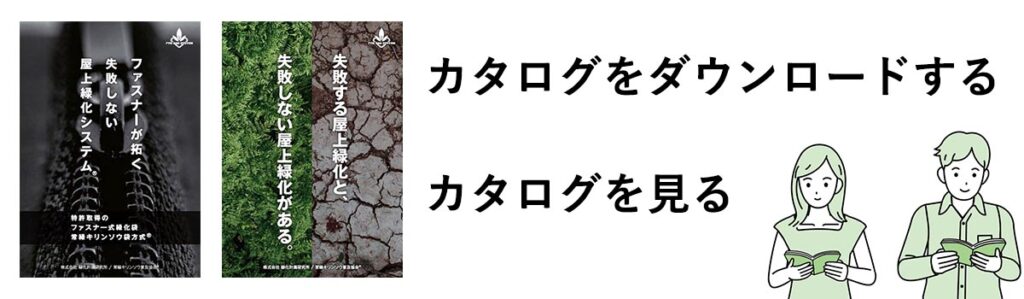
常緑キリンソウ袋方式・カタログ&CAD図ダウンロード TOPへ
常緑キリンソウ袋方式に関するよくあるご質問(FAQ)TOPへ
常緑キリンソウ・常緑キリンソウ袋方式へのお問い合わせはこちらへ
常緑キリンソウのニュース TOPへ
常緑キリンソウ袋方式 TOPに戻る